Knowledge base › Thinking with it
Creative emergence
Roots, Missed Connections, Threads and Synthesize: how a linked ledger starts telling you things, and the three ideas behind it.
Emergence is when the ledger starts telling you things you did not put in it. Pages filed by day, picks that remember their sources, tags and links that cross-cut them: after a few weeks the connections outnumber the entries, and the app has three ways of showing you what they add up to.
Roots
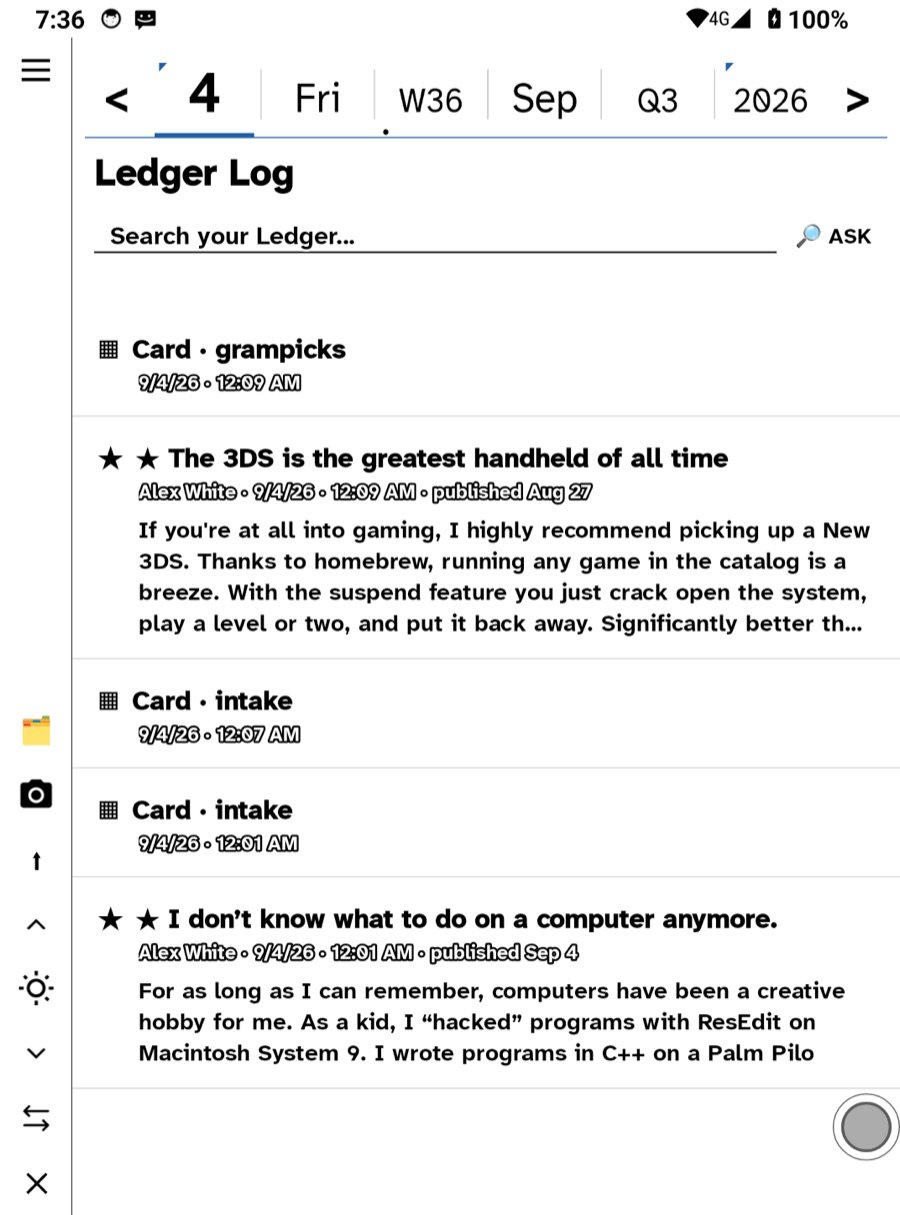
What you have actually engaged with, read closely, starred, written about, becomes your Roots. Not everything you touched; the things that took hold. Roots sit on the day page, so what you are thinking about is next to what you are writing. They are found by an on-device model reading your own pages; nothing leaves the device.
Missed Connections
Ledgable reads the things you walked past, unread, never starred, scrolled by, and asks the same on-device model how deeply each one rhymes with your Roots. The few that rhyme deepest come back: not “you might also like”, but the thing you skipped in March that speaks to what you are chewing on today. Each one can become a pick, dropped beside the root it echoes, so the missed thing rejoins the corpus instead of scrolling away. Scope it with the almanac strip and it re-runs discovery for that period.
Threads and the Directory
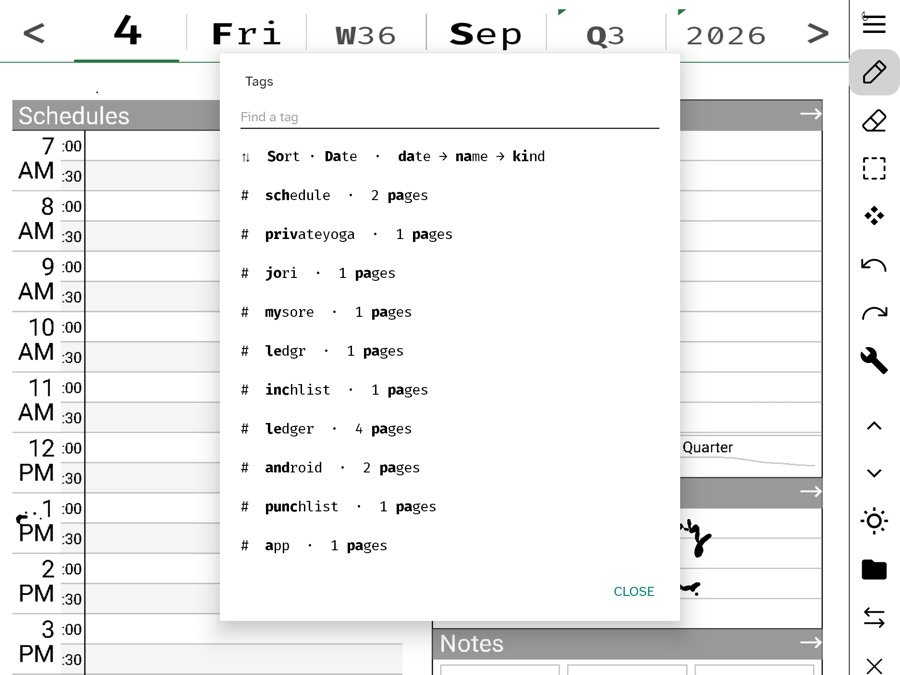
Threads pull one subject across years, oldest first, so you can watch yourself change your mind. The Directory cuts the other way, by the paper you wrote on: lines, jots, grid, pickings, each with counts. Between them you can answer “I know I jotted something about this, some time in August”, which a folder tree cannot.
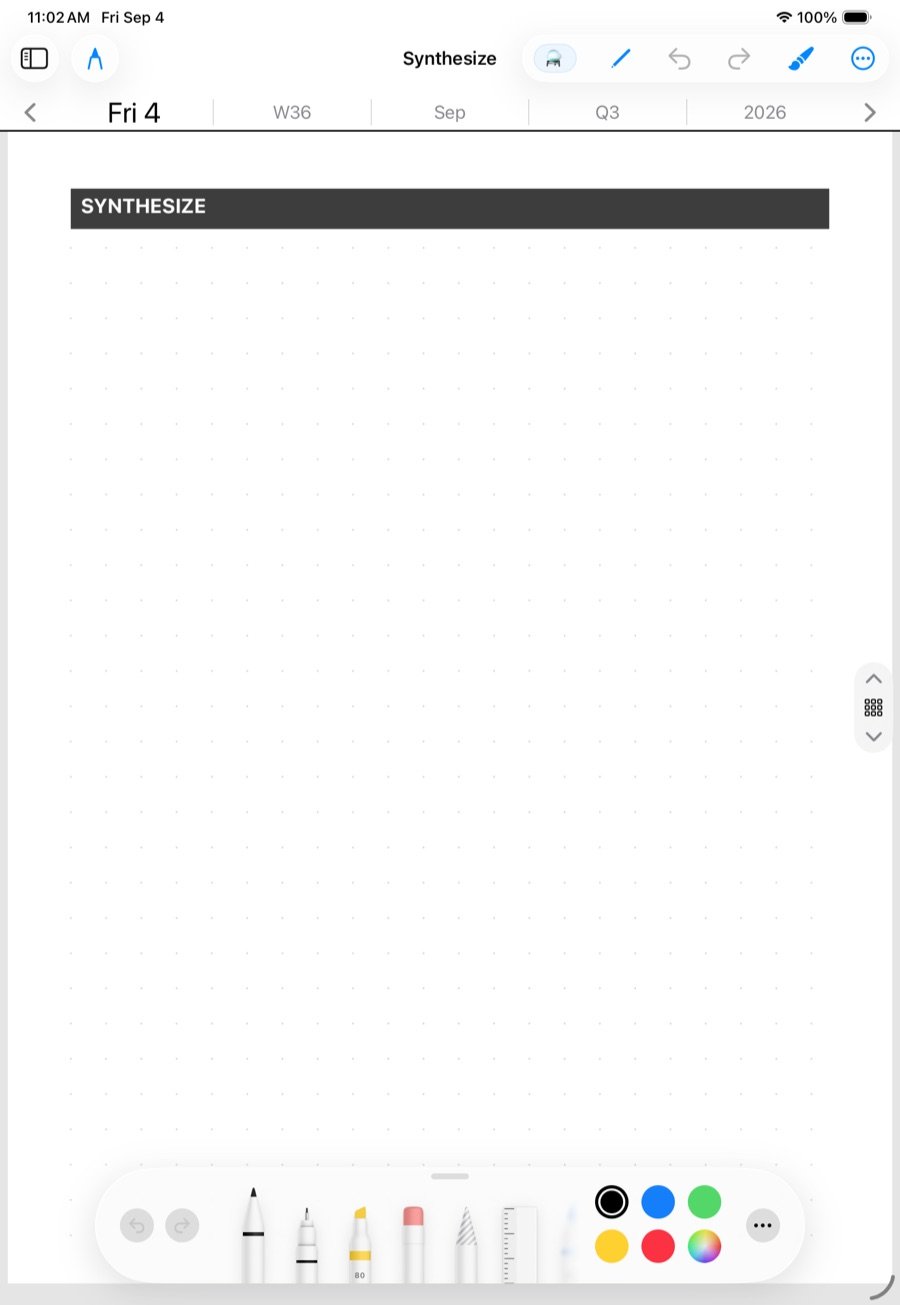
Synthesize
When a board or a day is full enough, write a question and summon. The reply flows onto the page with the day’s stars and picks as its basket, using a key you hold. Or hand a passage to Ask for three questions. Both leave cards that point back at their sources, so the synthesis is itself picked material for the next round. See Ask my Ledger.
Why it works
Three old ideas, running on a device instead of in a book:
- Zettelkasten. Luhmann’s slip-box grew new arguments because slips were small, linked, and never filed under a single heading. Picks are slips; tags and links are the numbering.
- The rhizome. Deleuze and Guattari’s image for knowledge with no trunk: any point connects to any other, and you can enter anywhere. Day, tag, link, template, search, rhizome; whichever door your head offers today will work.
- Systems thinking. A ledger is a stock; reading, picking and writing are flows; Roots and Missed Connections are feedback loops. Emergence is what feedback does to a stock over time. The day walk is the loop you close by hand.
Learn the ideas
Watch: The rhizome, from A Thousand Plateaus
Watch: Stocks, flows and feedback loops
Then read Donella Meadows, Thinking in Systems, and Sönke Ahrens, How to Take Smart Notes. The Tags and links article has the Ahrens conversation.
In this section: Thinking with it
Ledgable — cozy and transgressive